

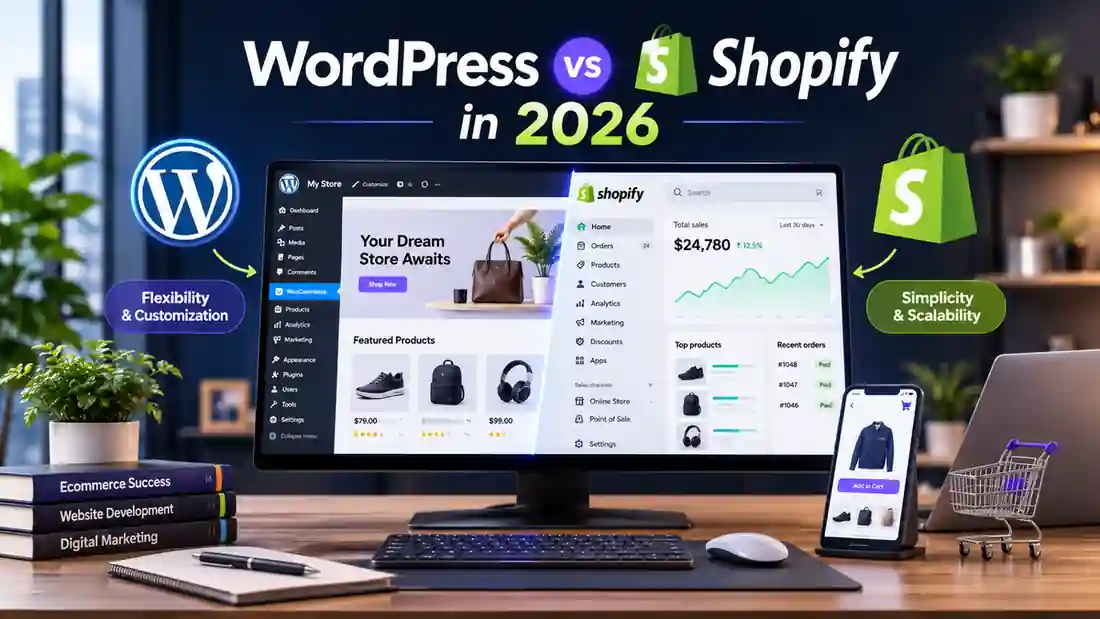
Introduction
The selection of the right platform for an online store can shape how easily a business starts, manages sales, and achieves long-term growth. In the WordPress vs Shopify comparison, both platforms offer different advantages and features. Shopify makes online selling easier with built-in hosting, security, and store management tools. WordPress with WooCommerce gives business owners more control over website design, customization, and search engine optimization strategies. However, choosing the best option is not just about features; it is also about cost, flexibility, and future business needs. In this article, we break down WordPress vs Shopify in 2026 to help you choose the platform that matches your goals and budget.
Understanding WordPress and Shopify
Before comparing their features, it is important to understand what makes these platforms different.
WordPress (WooCommerce) Overview
WordPress is an open-source content management system (CMS) that helps people create and manage websites without writing all the code themselves. Whether someone wants to start a blog, build a business website, or open an online store, WordPress offers the flexibility to do it.
It supports different types of websites, including:
- Business websites: Present services, company information, and contact details.
- Blogs: Publish articles, guides, news, and other useful content.
- Portfolio websites: Display projects, skills, and previous work.
- Membership websites: Provide exclusive content to registered members.
- Online stores: Sell physical or digital products through WooCommerce.
Shopify Overview
Shopify is a hosted e-commerce platform that helps individuals and businesses create and manage online stores without advanced coding skills. It provides built-in tools for managing products, processing payments, tracking orders, and handling store operations.
It supports different types of online stores, including:
- Clothing and fashion stores: Sell clothes, shoes, accessories, and fashion products.
- Electronics stores: Sell mobile phones, computers, gadgets, and other electronic products.
- Beauty and skincare stores: Offer cosmetics, skincare products, and beauty accessories.
- Digital product stores: Sell e-books, templates, digital downloads, and other online resources.
- Dropshipping stores: Sell products without managing physical inventory.
- Subscription-based stores: Offer products through recurring payment plans.
| Comparison | Shopify | WordPress (WooCommerce) |
|---|---|---|
| Platform Type | Hosted eCommerce platform | Self-hosted CMS with WooCommerce |
| Online Selling | Built-in shopping and selling tools | WooCommerce adds store functionality |
| Setup | Quick setup with a simple dashboard | Requires hosting, installation, and configuration |
| Pricing | Monthly plans, apps, themes, and other fees | Free core software with hosting and additional costs |
| Payments | Shopify Payments or supported third-party gateways | WooPayments or supported payment plugins |
| SEO | Built-in SEO tools with some URL limitations | More control through SEO plugins and customization |
| Best For | Businesses wanting easy store management | Businesses needing more flexibility and control |
WordPress vs Shopify: Quick Comparison
The important difference is that WordPress gives users more responsibility alongside greater control, whereas Shopify reduces technical responsibilities through its managed platform.
1. Setup and User Experience
Ease of use matters, especially for beginners starting their first online business. Both platforms offer website-building tools, but their setup processes are different.
Shopify: It keeps things simple. Users can create an account, choose a theme, add products, and configure store settings from one dashboard. No coding is required for most common store management tasks.
WordPress (WooCommerce): It takes a little more setup. Users need to arrange web hosting, install WordPress, configure WooCommerce, choose a suitable theme, and add the plugins their business requires.
There’s a learning curve. However, beginners can make the process easier with one-click WordPress installation options offered by many hosting providers. Page builders such as Elementor also simplify website design.
Which Platform Is Easier to Use?
Shopify is the more convenient choice for beginners who want to launch an online store quickly. WordPress is better suited to users who want greater customization and control and are willing to learn website management.
2. Website Design and Customization
Your website is your business’s online identity. Its design, layout, navigation, and product display can affect how visitors see and trust your brand.
WordPress (WooCommerce): It offers more design freedom. Users can choose from thousands of themes, use page builders like Elementor, install plugins, or hire developers to create a custom website.
Shopify: It also offers ready-made themes and apps to customize online stores. Users can change colors, fonts, layouts, and other design elements without advanced coding skills. Developers can also customize Shopify themes using its Liquid programming language.
Which Platform Offers Better Design Flexibility?
WordPress is a better choice for businesses that want more design freedom and customization options. Shopify is suitable for businesses that prefer ready-made designs and simple store customization.
3. Pricing and Costs
Cost is an important factor when choosing an eCommerce platform. But the starting price doesn’t tell the whole story. Both platforms have different costs.
WordPress (WooCommerce): It is free to download and use. However, running an online store requires some additional expenses, such as:
- Domain: The address of your website.
- Web hosting: A service that keeps your website online.
Shopify: It uses a monthly subscription model. Its plans include web hosting and the main tools needed to run an online store. However, users may also need to pay for premium themes, apps, and payment processing fees.
Think about long-term expenses, too. A cheaper starting price doesn’t always mean lower costs over time.
Which Offers Better Value for Money?
WordPress gives users more control over their spending, but running a store still involves additional costs. Shopify offers a more organized monthly pricing system, although paid apps and other services can increase the total expense.
4. SEO Performance Comparison
Search Engine Optimization helps people find your website through search engines like Google. Both WordPress and Shopify offer tools to improve website visibility, but their features differ.
WordPress (WooCommerce): It provides greater SEO flexibility. Plugins like Yoast SEO and Rank Math help manage meta titles, descriptions, XML sitemaps, schema markup, and other SEO settings. Users also have more control over URLs, blog content, and internal linking.
Shopify: It includes built-in SEO tools. Store owners can edit product titles, meta descriptions, image alt text, and page content. It also automatically generates XML sitemaps and provides SSL certificates. However, its URL structure has some fixed settings.
Good SEO isn’t just about tools. Content quality, website speed, mobile experience, and useful information also matter.
Which Platform Offers Better SEO Control?
WordPress offers more SEO customization, while Shopify provides essential SEO tools with less technical work. Both can rank well on Google with proper optimization.
5. Security and Maintenance
Security is important for every online store, especially when handling customer details, accounts, and payments.
Shopify: It manages most technical tasks, including server maintenance, platform updates, and core security. This means store owners have less maintenance work to handle.
WordPress (WooCommerce): It requires more attention. Website owners need to update WordPress, themes, and plugins, manage backups, and apply security measures.
Which Platform Offers Easier Website Security and Maintenance?
Shopify is easier to maintain because most technical tasks are managed by the platform. WordPress offers more control but requires regular maintenance and security checks.
6. Market Share Comparison
WordPress and Shopify are both popular website-building platforms, but WordPress has a much larger presence across the web.
According to BuiltWith, WordPress powers more than 31.8 million live websites, while Shopify is used by over 5.8 million live websites.
Data from W3Techs also shows a clear difference. WordPress accounts for 60.8% of websites with a known CMS, compared to 6.7% for Shopify.
This means WordPress has a much larger share of the CMS market. For every website using Shopify, nearly nine websites use WordPress. These figures show WordPress’s wider adoption, while Shopify remains a popular choice for businesses focused on online selling.
Frequently Asked Questions About WordPress vs Shopify
1. Is WordPress or Shopify better for beginners?
Shopify is easier for beginners due to it includes hosting and store management tools. WordPress offers more flexibility but requires additional setup.
2. Is WordPress cheaper than Shopify?
WordPress with WooCommerce is free, but hosting, domain, and other services may cost extra. Shopify requires a monthly subscription.
3. Which is better for SEO, WordPress or Shopify?
WordPress offers more SEO control through plugins like Yoast SEO and Rank Math. Shopify provides built-in SEO tools for online stores.
4. Is Shopify better than WooCommerce?
Shopify is easier to manage, while WooCommerce offers more customization. The better choice depends on your business needs.
5. Which platform is more secure, WordPress or Shopify?
Shopify manages most security tasks. WordPress can also be secure with reliable hosting, regular updates, and proper backups.
6. Can I migrate from Shopify to WordPress?
Yes. You can transfer products, customer details, orders, and website content from Shopify to WooCommerce with proper planning.
7. Which platform is best for small businesses in 2026?
Shopify suits businesses looking for simple store management. WordPress with WooCommerce is better for businesses that need more control and customization.