

Keyword research in 2026 showing search intent, trends, competitor gaps, content ideas, and SEO analysis on a laptop

How to Do Keyword Research in 2026: 6 Methods + A Practical Framework

Introduction

Keyword research is a part of a successful content and SEO strategy.

Before creating content or optimizing a web page you need to understand what your audience searches for, how they search and what information they expect to find.

In 2026 keyword research is about more than finding keywords with search volume. It focuses on identifying search terms, questions and topics that provide value to both your audience and business.

This guide covers six methods for finding valuable keywords and a simple framework for prioritizing them.

Why Is Keyword Research Important for SEO and AI Search?

Keyword research helps you understand your audience and their search behavior. It can reveal:

  • The questions your audience is asking
  • The phrases they use to describe problems
  • The solutions they are researching
  • Their position in the buying journey

This information helps you create content based on demand rather than assumptions.

When your content matches search intent it can attract visitors and support actions such as inquiries, sign-ups, purchases and demo requests.

How Has Keyword Research Changed?

Modern keyword research has changed in three ways.

1. From Search Volume to Business Value

search volume is no longer enough to determine whether a keyword is valuable. AI-powered search can answer broad queries without users clicking a website.

Modern keyword research therefore considers business value including brand awareness, qualified traffic, leads and conversions.

2. From Google-Only to Search Everywhere

People now search across Google, Reddit, Amazon, YouTube, ChatGPT, social media and other AI-powered platforms.

Your keyword strategy should consider where your target audience actually searches for information.

3. From Simple Queries to Conversational Prompts

AI tools have encouraged users to search with more specific prompts.

Keyword research should therefore include keywords as well as conversational and intent-rich queries.

6 Ways to Find Valuable Keywords

Use these six methods to discover keywords and content opportunities.

When evaluating a keyword consider whether it can:

  • Increase brand awareness
  • Improve AI search visibility
  • Attract qualified leads
  • Support sales or conversions

A keyword does not need to achieve all four goals to be valuable.

1. Check Your Existing Search Visibility

Your website may already rank for keywords that you have not intentionally targeted. These rankings can reveal opportunities for improved content.

If your website is new. Has little search visibility move to the next method.

1. Use Google Search Console: Google Search Console shows the queries that generate impressions and clicks for your website.

Open Performance → Search results. Review your queries. Look for keywords that receive impressions but few clicks.

These terms may indicate opportunities to improve your title, content or alignment with search intent.

2. Use Bing Webmaster Tools: Bing Webmaster Tools can provide information about your visibility in AI-powered search experiences.

Its AI Performance report can show queries where your pages are cited in Microsoft Copilot responses. These insights can help identify topics where additional or better content may improve visibility.

3. Use an Organic Rankings Tool: An organic rankings tool can identify keywords your website already ranks for.

Useful filters include:

  • Position 11+: Find keywords ranking on page two or later.
  • Search volume 100+: Find keywords with demand.
  • Keyword difficulty 0–49%: Identify less competitive opportunities.

Always check relevance before adding a keyword to your strategy.

2. Study First-Party Data

Your customer and prospect data can reveal keyword ideas that traditional tools may miss.

Useful sources include:

  • Sales calls
  • Customer support tickets
  • Onboarding questions
  • Customer conversations
  • Prospect feedback

Repeated questions can indicate demand even when a keyword tool reports little or il6no search volume.

1. Analyze Sales Calls

Sales conversations can reveal customer needs, objections and decision-making questions.

Ask your sales team:

  • What questions do prospects ask repeatedly?
  • What objections delay purchases?
  • What do prospects ask about competitors?
  • Which features or use cases matter most?

Record the exact language customers use because it can provide keyword ideas.

2. Analyze Support and On boarding Questions

Support and on-boarding conversations can reveal information gaps.

Look for:

  • Repeated questions
  • On-boarding problems
  • Feature confusion
  • Integration questions

For example repeated questions about exporting data to Excel could become a tutorial that helps both existing and potential customers.

3. Mine Social Platforms and Online Communities

Online communities can reveal how people naturally describe their problems and needs.

Useful sources include:

  • Reddit
  • Quora
  • YouTube
  • TikTok
  • Industry-specific communities

Look for repeated questions, discussions and unanswered problems related to your industry.

These conversations can become content and long-tail keyword opportunities.

Use AI to Analyze Discussions

AI tools can help analyze amounts of comments and discussions.

Ask AI to identify keyword opportunities based on:

  • Unanswered questions
  • User pain points
  • Information needs

Some ideas may have search volume but can still be valuable if they address genuine customer needs.

4. Search a Keyword Database

Keyword databases help you discover keywords and evaluate them using metrics such as:

  • Search volume
  • Keyword difficulty
  • Search intent
  • Trends

Start with a keyword related to your business and explore terms, questions and topic groups.

Use Question-Based Keywords

Question-based searches are useful for finding long-tail keywords.

Long-tail keywords are phrases with clearer search intent. They often have search volume than broad keywords but may also face less competition.

Of targeting only a broad term such as “website design,” consider specific questions that address a particular problem or need.

These keywords can help you create content that directly answers what users want to learn.

5. Conduct a Keyword Gap Analysis

A keyword gap analysis identifies keywords that competitors rank for while your website does not.

This can reveal content opportunities that you may have overlooked.

Traditional Keyword Gap Analysis

Compare your website with competitors and focus on two areas:

  • Missing keywords: Keywords that competitors rank for but your website does not currently rank for making them potential opportunities for improved content.
  • Weak keywords: Keywords where your website already ranks. Competitors rank higher suggesting that your content may need better optimization, greater depth or stronger alignment with search intent.

Competitor Prompt Analysis

AI search adds another dimension to competitor research.

Look at the questions and prompts where competitors appear in AI-powered search results. Identify topics where competitors receive visibility. Your website is not mentioned.

These gaps can help guide content creation.

6. Analyze Search Suggestions and SERP Features

Search suggestions and SERP features can provide keyword ideas.

People Also Ask

The People Also Ask section can reveal questions users commonly search for.

Use these questions to identify subtopics and long-tail keywords for your content.

Related Searches

Searches can show alternative phrases and connected topics that may expand your keyword list.

AI Overviews

AI Overviews can provide insight into the information search engines consider relevant to a topic.

Review the questions and topics covered to understand what users may expect from content.

How to Prioritize Your Keywords

Finding keywords is the first step. You also need to determine which ones deserve the attention.

1. Determine Conversion Potential

Consider whether the keyword connects with a product, service, problem or solution that your business can address.

2. Assess Search Volume

Search volume indicates the level of interest in a keyword. It should not be the only deciding factor.

3. Consider Click

AI answers, advertisements and other SERP features can reduce the number of clicks available from some searches.

4. Look for Real-World Demand

Customer questions, sales conversations, support requests and community discussions can reveal demand beyond traditional keyword metrics.

5. Analyze Keyword Trends

Trends help you determine whether interest in a keyword is growing, declining or remaining stable.

6. Evaluate Keyword Difficulty

Keyword difficulty helps estimate competition. Consider it alongside search intent, search volume, business value and your websites authority.

Build a Keyword Strategy That Creates Value

Effective keyword research is not about collecting hundreds of keywords. It is about understanding what your audience searches for and creating content that provides answers.

Focus on:

  • Search intent: Match your content with the reason, behind the search.
  • Business goals: Choose topics that support awareness, traffic, leads or conversions.
  • Useful content: Answer related questions and address problems.
  • Regular updates: Keep an eye on your keywords, rankings, customer questions and how your content performs as search behavior shifts over time.

A strong keyword strategy pulls together search data and real feedback from customers. When you focus on what people’re really looking for the value to your business and creating useful content you lay a solid base, for better SEO and AI search visibility in 2026.
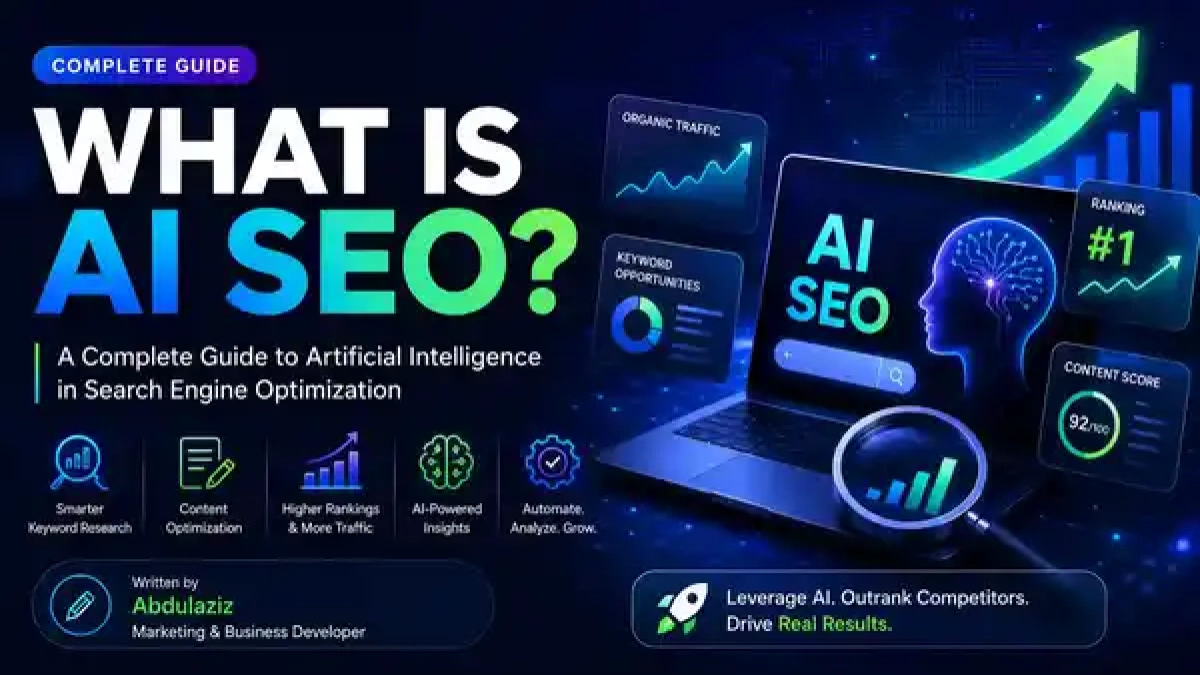
ai_seo_article_20kb

What Is AI SEO? A Complete Guide to Artificial Intelligence in Search Engine Optimization

Introduction

Artificial Intelligence (AI) is transforming industries across the globe, and Search Engine Optimization (SEO) is one of the areas experiencing the most significant change. As search engines become more intelligent and user expectations continue to rise, businesses must adapt their SEO strategies to remain competitive. This is where AI SEO comes into play.

AI SEO refers to the use of artificial intelligence technologies, machine learning algorithms, and automation tools to improve a website’s visibility in search engine results. These technologies help marketers analyze large amounts of data, understand user behavior, identify ranking opportunities, optimize content, and automate repetitive SEO tasks.

Traditional SEO often requires extensive manual effort, including keyword research, competitor analysis, content optimization, and technical audits. While these practices remain essential, AI dramatically improves efficiency by processing complex datasets in seconds and providing actionable insights that would otherwise take hours or even days to uncover.

Rather than replacing traditional SEO, AI enhances it. Businesses that successfully combine proven SEO principles with AI-powered insights can achieve stronger search rankings, better user engagement, and sustainable organic growth.


Understanding AI SEO

At its core, AI SEO uses artificial intelligence to make search engine optimization more effective and data-driven. AI-powered tools can analyze millions of search queries, user interactions, content trends, and ranking factors to help marketers make smarter decisions.

Modern search engines like Google already rely heavily on AI technologies to understand user intent and deliver the most relevant results. Therefore, marketers who leverage AI in their SEO strategies are better positioned to align their content with how search engines evaluate websites.

AI can assist with:

  1. Keyword research
  2. Content creation and optimization
  3. Search intent analysis
  4. Competitor research
  5. Technical SEO audits
  6. Internal linking recommendations
  7. User experience optimization
  8. Predictive SEO analysis
  9. Performance tracking and reporting

By integrating AI into SEO workflows, businesses can uncover hidden opportunities and improve overall website performance.

Key Benefits of AI SEO

AI SEO offers numerous advantages for businesses, marketers, content creators, and digital agencies.

1. Faster Keyword Research

Keyword research is one of the most important aspects of SEO. AI-powered tools can quickly analyze thousands of search terms and identify:

  • High-volume keywords
  • Low-competition keywords
  • Long-tail keywords
  • Question-based keywords
  • Trending search topics

Instead of manually reviewing keyword lists, marketers can use AI to discover opportunities within minutes.

Example:

A business targeting “digital marketing” may discover related keywords such as:

  • AI SEO tools
  • SEO automation
  • Search intent optimization
  • Content marketing strategies
  • Organic traffic growth

These insights help create more comprehensive content strategies.

2. Better Content Optimization

AI can analyze top-ranking pages and identify common factors contributing to their success.

This includes:

  • Content length
  • Keyword placement
  • Heading structure
  • Semantic keywords
  • User intent coverage
  • Readability scores

AI tools can provide recommendations that help improve content quality while maintaining a natural reading experience.

3. Competitor Analysis at Scale

Understanding competitors is essential for SEO success.

AI-powered SEO platforms can analyze:

  • Competitor keywords
  • Backlink profiles
  • Content strategies
  • Ranking trends
  • Traffic sources

This enables businesses to identify gaps and opportunities that competitors may be missing.

4. Improved Technical SEO Audits

Technical SEO can be complex, especially for large websites.

AI simplifies technical analysis by detecting issues such as:

  • Broken links
  • Slow-loading pages
  • Duplicate content
  • Missing metadata
  • Crawl errors
  • Mobile usability issues

Search intent refers to the reason behind a user’s search query. Understanding intent enables businesses to create content that better satisfies user needs and search engine expectations.

6. Time-Saving Automation

Many SEO activities involve repetitive tasks.

AI can automate:

  • Keyword clustering
  • Meta title generation
  • Meta description creation
  • Content briefs
  • SEO reporting
  • Site monitoring

This saves valuable time and allows marketers to focus on strategy and creativity.

How Does AI Affect SEO?

Artificial intelligence impacts SEO in two major ways:

1. Search Engines Use AI

Search engines increasingly rely on AI algorithms to understand content and user behavior.

Google’s advanced systems evaluate factors such as:

  • Content quality
  • Context
  • User engagement
  • Search intent
  • Page experience
  • Relevance

This means websites can no longer rank simply by repeating keywords. They must provide genuine value and answer users’ questions effectively.

2. Marketers Use AI

SEO professionals now use AI-powered tools to gain deeper insights and improve optimization efforts.

AI helps marketers:

  • Analyze data faster
  • Identify trends
  • Predict ranking opportunities
  • Improve content quality
  • Monitor performance

Can AI Improve SEO Rankings?

The answer is yes—but with an important distinction. AI itself does not automatically improve rankings. Instead, AI provides the insights, recommendations, and efficiencies that help marketers make better optimization decisions. Success still depends on implementing effective SEO strategies and creating valuable content.

When used correctly, AI can significantly improve:

  • Organic traffic
  • Search visibility
  • Content quality
  • User engagement
  • Conversion rates 

How AI Helps Improve Rankings

1. Finds High-Potential Keywords

AI identifies keyword opportunities based on:

  • Search volume
  • Competition level
  • User inten
  • Trend analysis

These insights help businesses target keywords with the highest ranking potential.

2. Identifies Content Gaps

  • Content gaps are topics competitors cover but your website does not.
  • AI can quickly analyze competitor content and identify missing opportunities.
  • Filling these gaps often leads to increased rankings and traffic.

3. Optimizes On-Page SEO Elements

AI can recommend improvements for:

  • Title tags
  • Meta descriptions
  • Header tags
  • Image optimization
  • Keyword placement
  • Content structure

These enhancements contribute to stronger on-page SEO.

4. Improves Website Structure

Website architecture affects both users and search engines.

AI helps improve:

  • Internal linking
  • Navigation
  • Content organization
  • Crawl-ability

A well-structured website is easier for search engines to understand and index.

5.Enhances User Engagement Signals

Search engines pay attention to user behavior.

AI can identify ways to improve:

  • Click-through rates (CTR)
  • Dwell time
  • User engagement
  • Content interaction

Positive engagement signals often correlate with higher rankings.        

6. Supports Data-Driven Decision Making

Rather than relying on assumptions, AI provides data-backed insights.

This enables marketers to:

  • Prioritize opportunities
  • Allocate resources effectively
  • Measure performance accurately
  • Adapt strategies quickly.

Popular AI SEO Techniques

1. AI Keyword Clustering

AI Keyword Clustering is the process of grouping related keywords and search queries based on their meaning, search intent, and semantic relationships. Instead of creating separate pages for similar keywords, AI helps marketers organize them into relevant topic clusters. This allows businesses to create comprehensive content that targets multiple keyword variations while improving topical authority. As a result, websites can rank for a broader range of searches and provide a better user experience.

2. AI Content Optimization

AI Content Optimization uses artificial intelligence to analyze and improve content for search engines and users. It evaluates factors such as keyword usage, readability, content structure, semantic relevance, and user intent. AI tools can identify missing topics, suggest related keywords, and recommend improvements based on top-ranking pages. This helps create more valuable, engaging, and search-friendly content that has a higher chance of ranking well.

3. Predictive SEO

Predictive SEO uses AI and data analysis to forecast future search trends and user behavior. By examining historical search data, seasonal patterns, and emerging topics, AI can identify keywords that may become popular in the future. This allows businesses to create content before competitors and gain an early ranking advantage. Predictive SEO helps marketers stay ahead of industry changes and adapt their content strategies proactively.

4. AI Content Brief Creation

AI Content Brief Creation helps marketers and writers generate detailed content outlines based on search data and competitor analysis. AI tools can recommend target keywords, headings, frequently asked questions, content length, and important subtopics to include. This ensures that writers cover all relevant information users are searching for. Well-structured content briefs improve consistency, reduce research time, and increase the likelihood of creating high-performing content.

5. Automated SEO Audi

Entity-Based SEO focuses on optimizing content around topics, concepts, people, places, and things rather than relying solely on keywords. Search engines increasingly use entities to better understand content context and relationships between subjects. By covering a topic comprehensively and connecting related concepts, websites can improve relevance and authority. This approach helps content align with modern search engine algorithms and enhances visibility in search results.

The Future of AI SEO

As AI technology continues to evolve, businesses can expect: 

  1. More personalized search results
  2. Better search intent understandin
  3. Advanced content recommendations
  4. Smarter automation tools
  5. Improved predictive analytics
  6. Enhanced user experience optimization

Organizations that embrace AI while maintaining a strong focus on quality content and user satisfaction will be best positioned for long-term SEO success.

Conclusion

AI SEO represents the next evolution of search engine optimization. By combining artificial intelligence with proven SEO practices, businesses can make smarter decisions, automate repetitive tasks, uncover valuable opportunities, and create content that better serves users.

While AI does not replace the fundamentals of SEO, it significantly enhances them. From keyword research and content optimization to technical audits and predictive analysis, AI provides powerful tools that help websites compete in an increasingly sophisticated search landscape.

The most successful SEO strategies of the future will not rely solely on technology or human expertise alone. Instead, they will combine both—leveraging AI’s analytical power alongside human creativity, strategy, and understanding of audience needs.Businesses that adopt this balanced approach will be better equipped to improve search rankings, increase organic traffic, and achieve sustainable digital growth in the years ahead.