

Introduction
Artificial Intelligence (AI) is transforming industries across the globe, and Search Engine Optimization (SEO) is one of the areas experiencing the most significant change. As search engines become more intelligent and user expectations continue to rise, businesses must adapt their SEO strategies to remain competitive. This is where AI SEO comes into play.
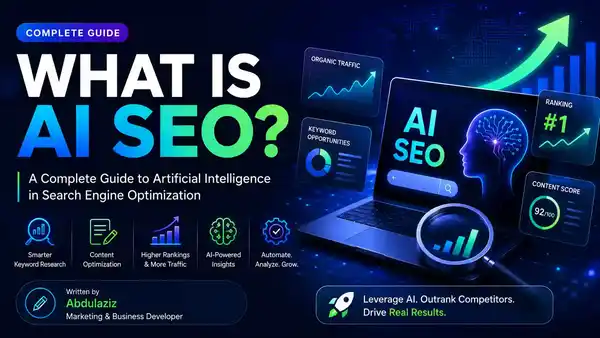
AI SEO refers to the use of artificial intelligence technologies, machine learning algorithms, and automation tools to improve a website’s visibility in search engine results. These technologies help marketers analyze large amounts of data, understand user behavior, identify ranking opportunities, optimize content, and automate repetitive SEO tasks.
Traditional SEO often requires extensive manual effort, including keyword research, competitor analysis, content optimization, and technical audits. While these practices remain essential, AI dramatically improves efficiency by processing complex datasets in seconds and providing actionable insights that would otherwise take hours or even days to uncover.
Rather than replacing traditional SEO, AI enhances it. Businesses that successfully combine proven SEO principles with AI-powered insights can achieve stronger search rankings, better user engagement, and sustainable organic growth.
Understanding AI SEO
At its core, AI SEO uses artificial intelligence to make search engine optimization more effective and data-driven. AI-powered tools can analyze millions of search queries, user interactions, content trends, and ranking factors to help marketers make smarter decisions.
Modern search engines like Google already rely heavily on AI technologies to understand user intent and deliver the most relevant results. Therefore, marketers who leverage AI in their SEO strategies are better positioned to align their content with how search engines evaluate websites.
AI can assist with:
- Keyword research
- Content creation and optimization
- Search intent analysis
- Competitor research
- Technical SEO audits
- Internal linking recommendations
- User experience optimization
- Predictive SEO analysis
- Performance tracking and reporting
By integrating AI into SEO workflows, businesses can uncover hidden opportunities and improve overall website performance.
Key Benefits of AI SEO
AI SEO offers numerous advantages for businesses, marketers, content creators, and digital agencies.
1. Faster Keyword Research
Keyword research is one of the most important aspects of SEO. AI-powered tools can quickly analyze thousands of search terms and identify:
- High-volume keywords
- Low-competition keywords
- Long-tail keywords
- Question-based keywords
- Trending search topics
Instead of manually reviewing keyword lists, marketers can use AI to discover opportunities within minutes.
Example:
A business targeting “digital marketing” may discover related keywords such as:
- AI SEO tools
- SEO automation
- Search intent optimization
- Content marketing strategies
- Organic traffic growth
These insights help create more comprehensive content strategies.
2. Better Content Optimization
AI can analyze top-ranking pages and identify common factors contributing to their success. This includes:
- Content length
- Keyword placement
- Heading structure
- Semantic keywords
- User intent coverage
- Readability scores
AI tools can provide recommendations that help improve content quality while maintaining a natural reading experience.
3. Competitor Analysis at Scale
Understanding competitors is essential for SEO success. AI-powered SEO platforms can analyze:
- Competitor keywords
- Backlink profiles
- Content strategies
- Ranking trends
- Traffic sources
This enables businesses to identify gaps and opportunities that competitors may be missing.
4. Improved Technical SEO Audits
Technical SEO can be complex, especially for large websites. AI simplifies technical analysis by detecting issues such as:
- Broken links
- Slow-loading pages
- Duplicate content
- Missing metadata
- Crawl errors
- Mobile usability issues
Search intent refers to the reason behind a user’s search query. Understanding intent enables businesses to create content that better satisfies user needs and search engine expectations.
5. Time-Saving Automation
Many SEO activities involve repetitive tasks. AI can automate:
- Keyword clustering
- Meta title generation
- Meta description creation
- Content briefs
- SEO reporting
- Site monitoring
This saves valuable time and allows marketers to focus on strategy and creativity.
How Does AI Affect SEO?
Artificial intelligence impacts SEO in two major ways:
1. Search Engines Use AI
Search engines increasingly rely on AI algorithms to understand content and user behavior. Google’s advanced systems evaluate factors such as:
- Content quality
- Context
- User engagement
- Search intent
- Page experience
- Relevance
This means websites can no longer rank simply by repeating keywords. They must provide genuine value and answer users’ questions effectively.
2. Marketers Use AI
SEO professionals now use AI-powered tools to gain deeper insights and improve optimization efforts. AI helps marketers:
- Analyze data faster
- Identify trends
- Predict ranking opportunities
- Improve content quality
- Monitor performance
Can AI Improve SEO Rankings?
The answer is yes—but with an important distinction. AI itself does not automatically improve rankings. Instead, AI provides the insights, recommendations, and efficiencies that help marketers make better optimization decisions. Success still depends on implementing effective SEO strategies and creating valuable content.
When used correctly, AI can significantly improve:
- Organic traffic
- Search visibility
- Content quality
- User engagement
- Conversion rates
How AI Helps Improve Rankings
1. Finds High-Potential Keywords
AI identifies keyword opportunities based on:
- Search volume
- Competition level
- User inten
- Trend analysis
These insights help businesses target keywords with the highest ranking potential.
2. Identifies Content Gaps
- Content gaps are topics competitors cover but your website does not.
- AI can quickly analyze competitor content and identify missing opportunities.
- Filling these gaps often leads to increased rankings and traffic.
3. Optimizes On-Page SEO Elements
AI can recommend improvements for:
- Title tags
- Meta descriptions
- Header tags
- Image optimization
- Keyword placement
- Content structure
These enhancements contribute to stronger on-page SEO.
4. Improves Website Structure
Website architecture affects both users and search engines. AI helps improve:
- Internal linking
- Navigation
- Content organization
- Crawl-ability
A well-structured website is easier for search engines to understand and index.
5. Enhances User Engagement Signals
Search engines pay attention to user behavior. AI can identify ways to improve:
- Click-through rates (CTR)
- Dwell time
- User engagement
- Content interaction
Positive engagement signals often correlate with higher rankings.
6. Supports Data-Driven Decision Making
Rather than relying on assumptions, AI provides data-backed insights. This enables marketers to:
- Prioritize opportunities
- Allocate resources effectively
- Measure performance accurately
- Adapt strategies quickly.
Popular AI SEO Techniques
1. AI Keyword Clustering
AI Keyword Clustering is the process of grouping related keywords and search queries based on their meaning, search intent, and semantic relationships. Instead of creating separate pages for similar keywords, AI helps marketers organize them into relevant topic clusters. This allows businesses to create comprehensive content that targets multiple keyword variations while improving topical authority. As a result, websites can rank for a broader range of searches and provide a better user experience.
2. AI Content Optimization
AI Content Optimization uses artificial intelligence to analyze and improve content for search engines and users. It evaluates factors such as keyword usage, readability, content structure, semantic relevance, and user intent. AI tools can identify missing topics, suggest related keywords, and recommend improvements based on top-ranking pages. This helps create more valuable, engaging, and search-friendly content that has a higher chance of ranking well.
3. Predictive SEO
Predictive SEO uses AI and data analysis to forecast future search trends and user behavior. By examining historical search data, seasonal patterns, and emerging topics, AI can identify keywords that may become popular in the future. This allows businesses to create content before competitors and gain an early ranking advantage. Predictive SEO helps marketers stay ahead of industry changes and adapt their content strategies proactively.
4. AI Content Brief Creation
AI Content Brief Creation helps marketers and writers generate detailed content outlines based on search data and competitor analysis. AI tools can recommend target keywords, headings, frequently asked questions, content length, and important subtopics to include. This ensures that writers cover all relevant information users are searching for. Well-structured content briefs improve consistency, reduce research time, and increase the likelihood of creating high-performing content.
5. Automated SEO Audi
Entity-Based SEO focuses on optimizing content around topics, concepts, people, places, and things rather than relying solely on keywords. Search engines increasingly use entities to better understand content context and relationships between subjects. By covering a topic comprehensively and connecting related concepts, websites can improve relevance and authority. This approach helps content align with modern search engine algorithms and enhances visibility in search results.
The Future of AI SEO
As AI technology continues to evolve, businesses can expect:
- More personalized search results
- Better search intent understandin
- Advanced content recommendations
- Smarter automation tools
- Improved predictive analytics
- Enhanced user experience optimization
Organizations that embrace AI while maintaining a strong focus on quality content and user satisfaction will be best positioned for long-term SEO success.
Conclusion
AI SEO represents the next evolution of search engine optimization. By combining artificial intelligence with proven SEO practices, businesses can make smarter decisions, automate repetitive tasks, uncover valuable opportunities, and create content that better serves users.
While AI does not replace the fundamentals of SEO, it significantly enhances them. From keyword research and content optimization to technical audits and predictive analysis, AI provides powerful tools that help websites compete in an increasingly sophisticated search landscape.
The most successful SEO strategies of the future will not rely solely on technology or human expertise alone. Instead, they will combine both—leveraging AI’s analytical power alongside human creativity, strategy, and understanding of audience needs.Businesses that adopt this balanced approach will be better equipped to improve search rankings, increase organic traffic, and achieve sustainable digital growth in the years ahead.